Shirdi Sai Baba — Darshan, Aarti & Pilgrim Guide
An independent pilgrim portal for the Samadhi Mandir of Shri Sai Baba. Timings checked against the official Sansthan Trust programme.
A living shrine
Welcome to the home of Shri Sai Baba
In a quiet village in Maharashtra, a young fakir arrived around 1858 and never left. For sixty years he lived in a tumbledown mosque he renamed Dwarkamai, lit a sacred fire that still burns today, and taught a single message — Sabka Malik Ek, one God for all. Shirdi today draws crores of pilgrims every year. We help you plan that visit.
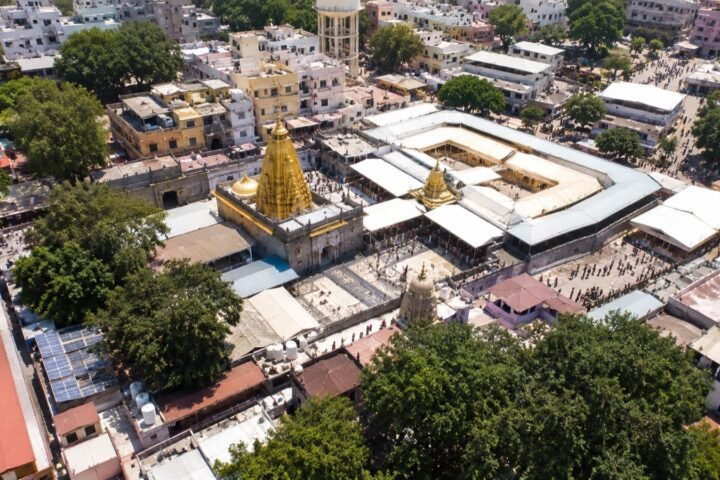
The four sacred spots inside the temple complex
Every Shirdi yatra moves through these four sites. Walk them in order and you trace Sai Baba’s own daily route through the village.
 Main shrine
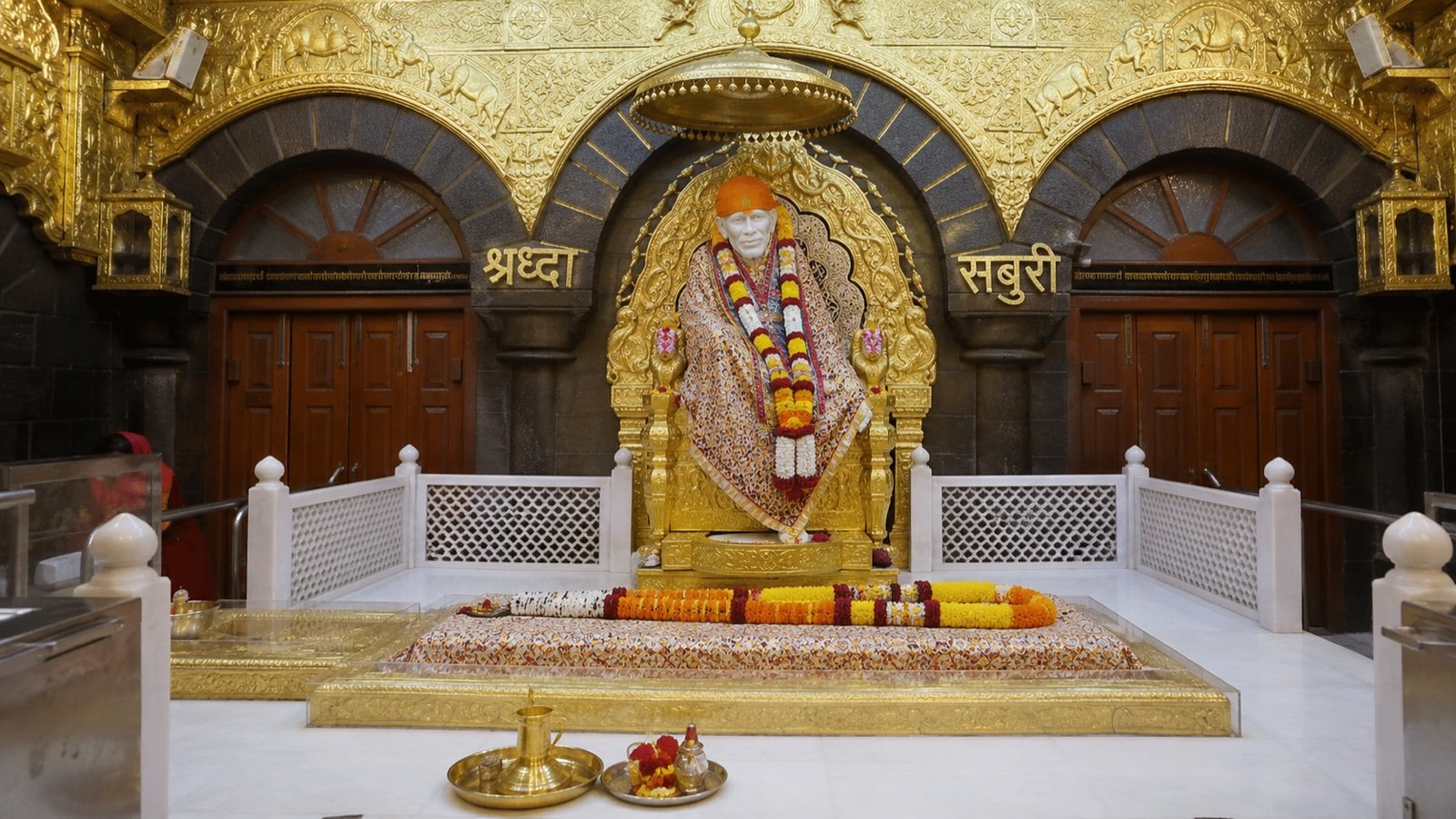
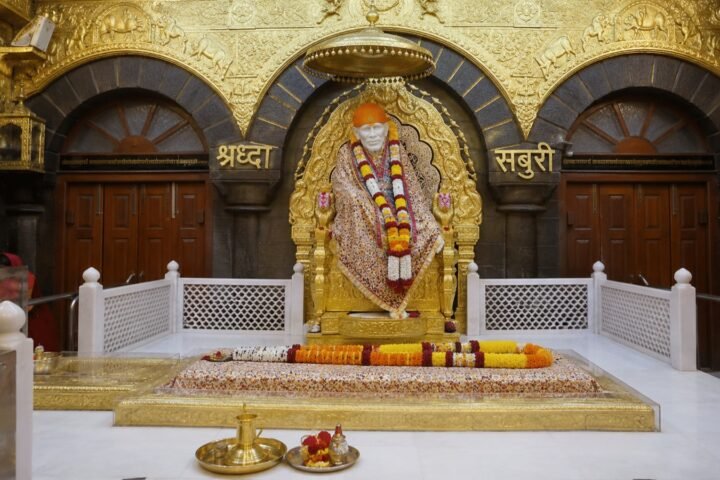
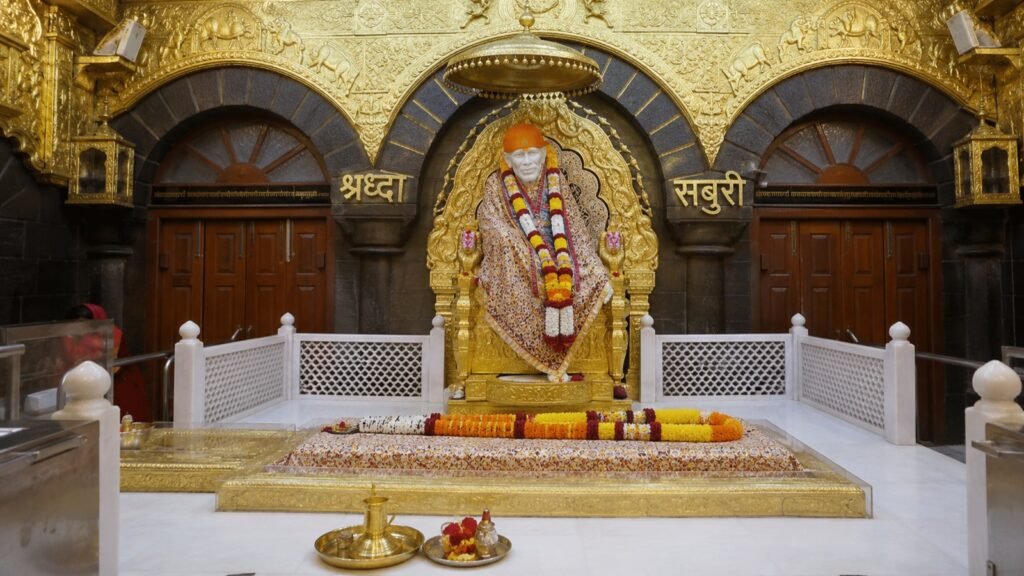
Samadhi Mandir
The white-marble shrine built in 1922 over Baba’s resting place. The famous murti was installed in 1954. Opens 4:45 AM, closes 11:30 PM.
Read Guide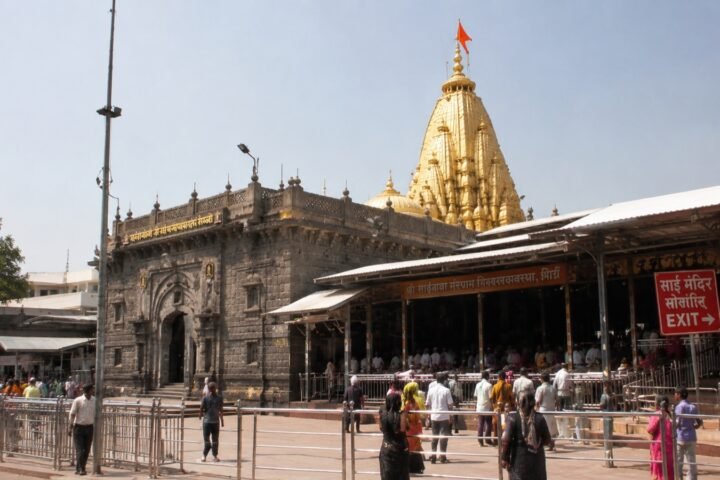 Baba's home
Dwarkamai
The crumbling mosque where Sai Baba lived for 60 years. Still holds the original dhuni fire, his grinding stone, the chillum and the wooden plank he slept on.
Read Guide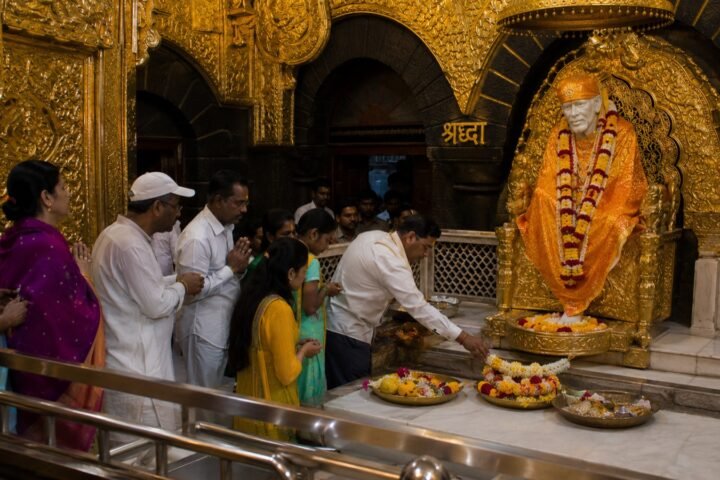 Thursday palki
Chavadi
The small village rest house where Baba slept on alternate nights. Every Thursday evening a torchlight palki procession recreates that journey.
Read Guide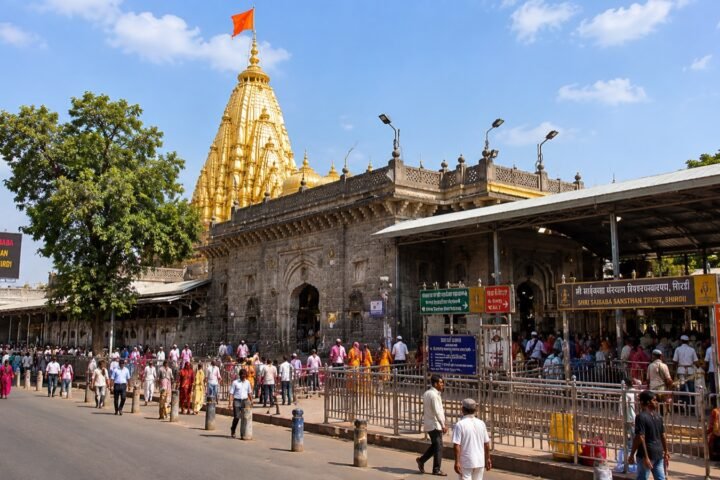 First welcome
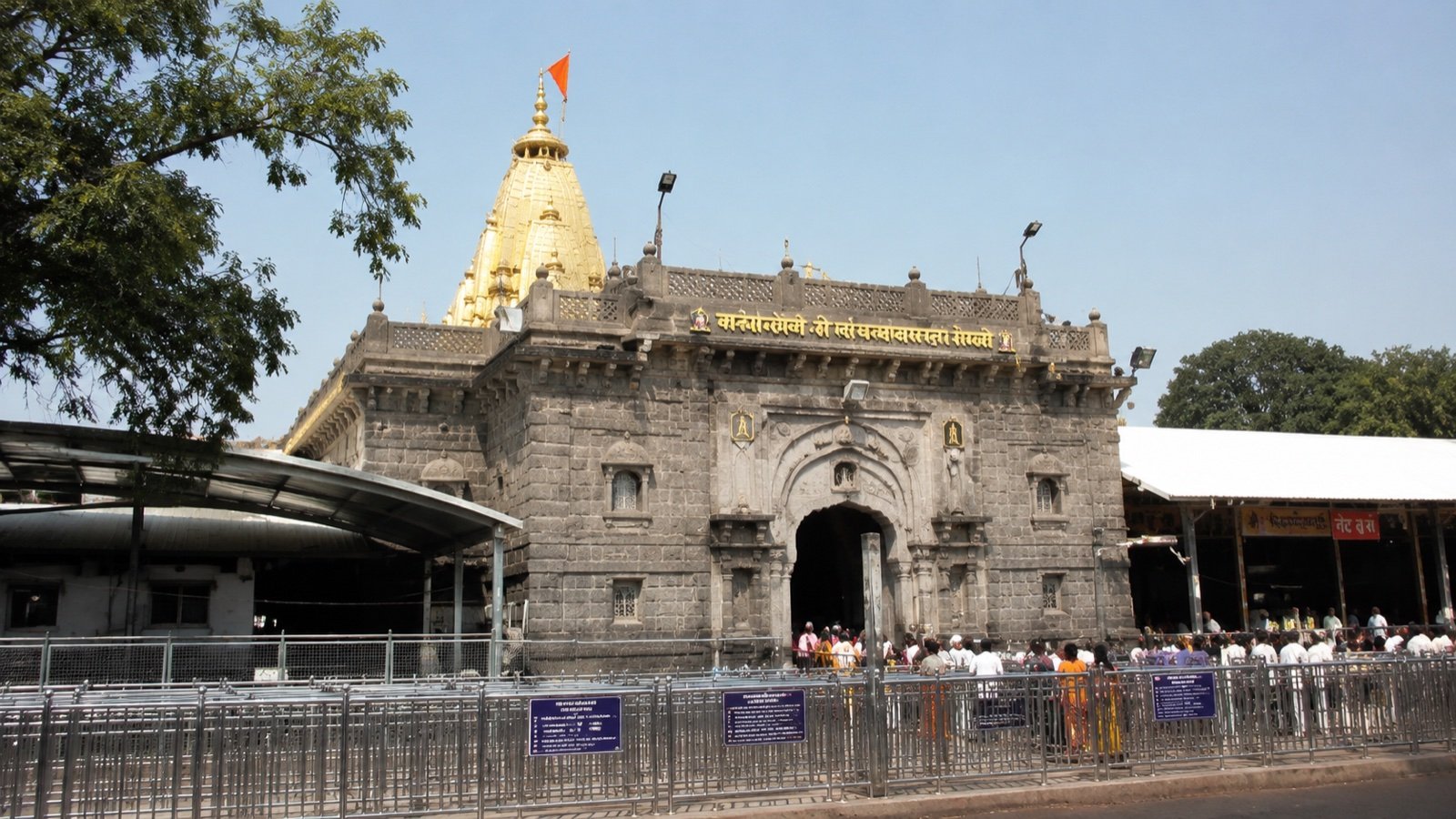
Khandoba Mandir
The village priest Mhalsapati greeted the young fakir here with “Ya Sai” — and the name stuck for the next century and a half.
Read Guide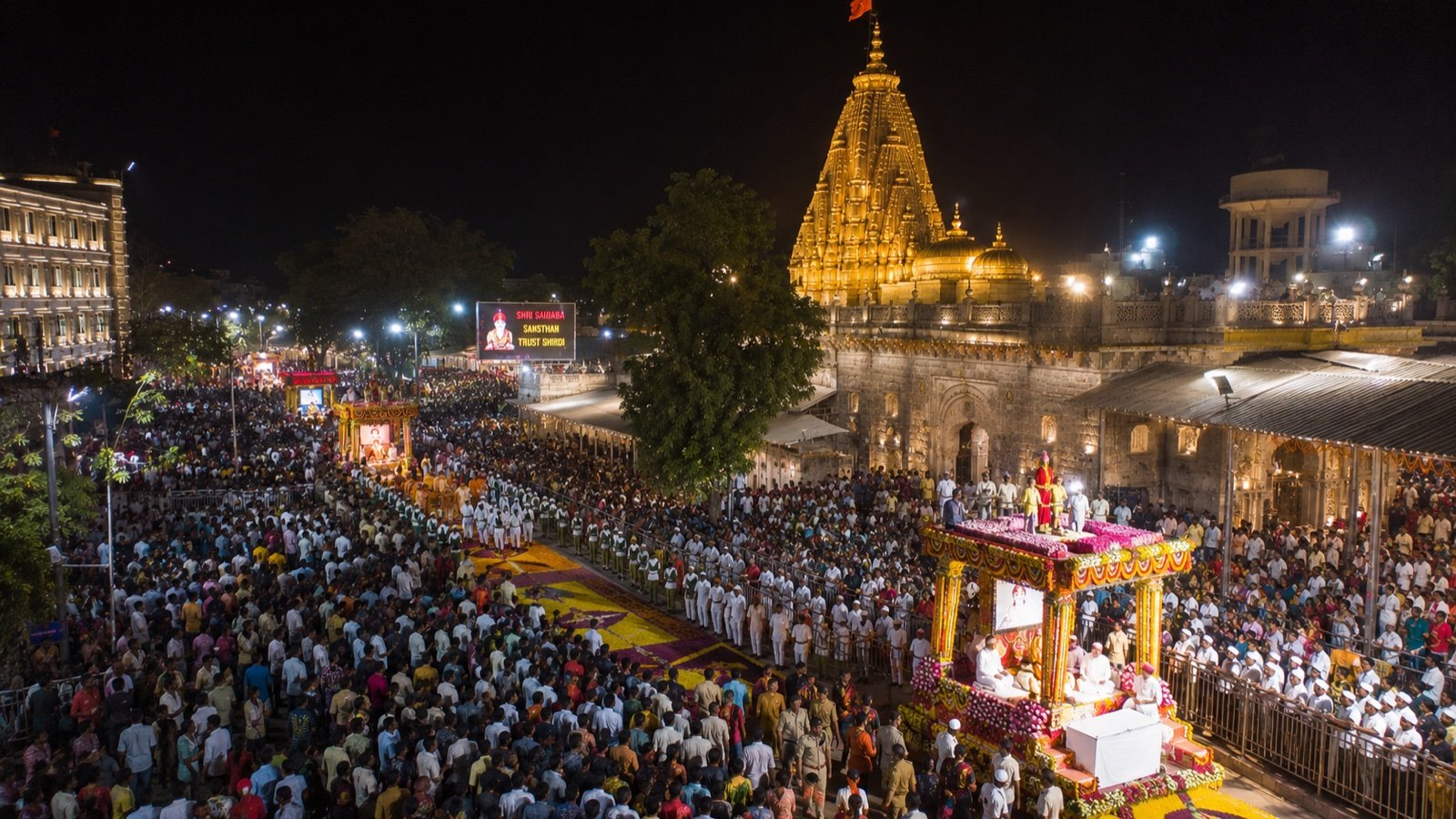
The four aartis — the rhythm of every day
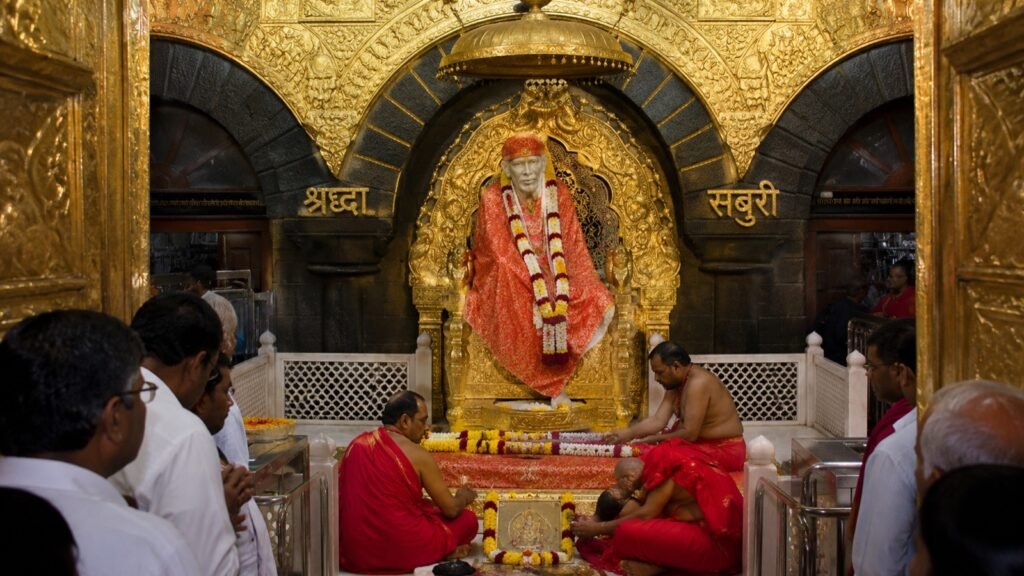
The temple breathes through four aartis. Kakad Aarti at 5:15 AM wakes Baba and the day. Madhyan Aarti at noon is the noisiest, attended by tens of thousands. Dhoop Aarti at sunset is the most photogenic — incense, oil-lamps and the temple silhouette. Shej Aarti at 10:00 PM puts Baba to bed with a folded shawl and a sandalwood paste mark on the murti.
Getting to Shirdi
Train: Sainagar Shirdi (SNSI) is the closest station. Direct services from Mumbai, Pune, Hyderabad, Bangalore, Chennai, Delhi and Indore.
Air: Shirdi International Airport (SAG) sits 14 km from the temple. Mumbai (BOM, 240 km), Pune (PNQ, 195 km) and Aurangabad (IXU, 130 km) are the next nearest.
Road: From Mumbai 4–5 hours, from Pune 3 hours via NH160. Sansthan and private buses run overnight services from every neighbouring city.
Why fear when I am here?
Festivals to plan around in 2026
Shirdi celebrates four major festivals each year. If you want to be part of the energy, book months ahead. If you prefer calm darshan, deliberately avoid these dates.
Ram Navami
26 March 2026 (Thursday)
Guru Purnima
29 July 2026 (Wednesday)
Sai Punyatithi / Vijaya Dashami
20 October 2026 (Tuesday)
Datta Jayanti
23 December 2026 (Wednesday)
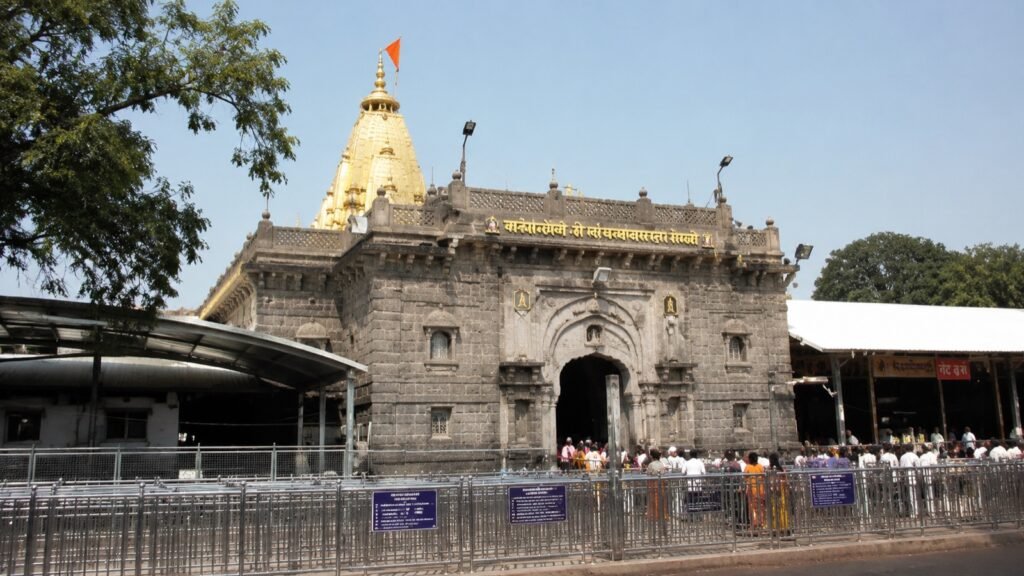
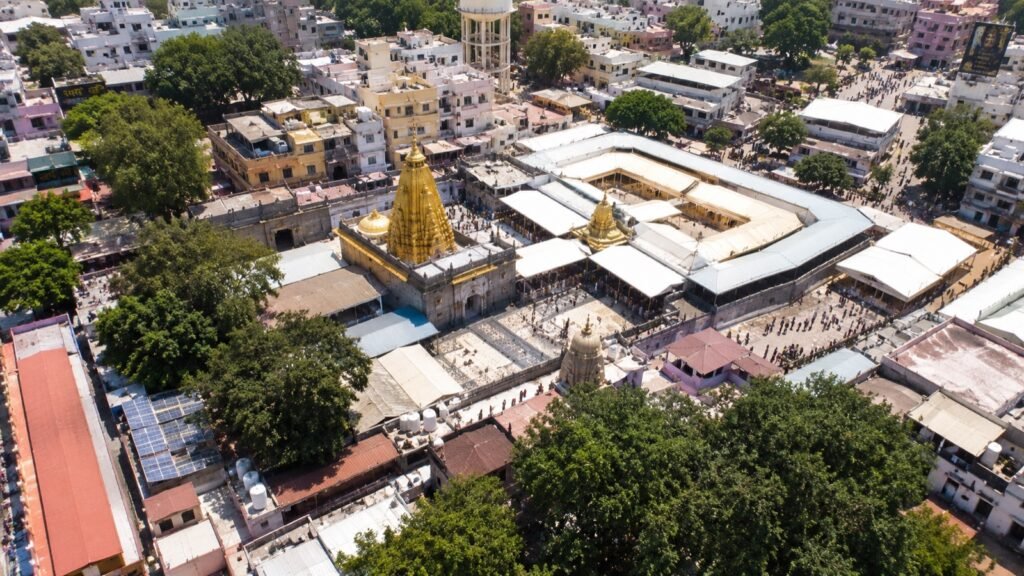
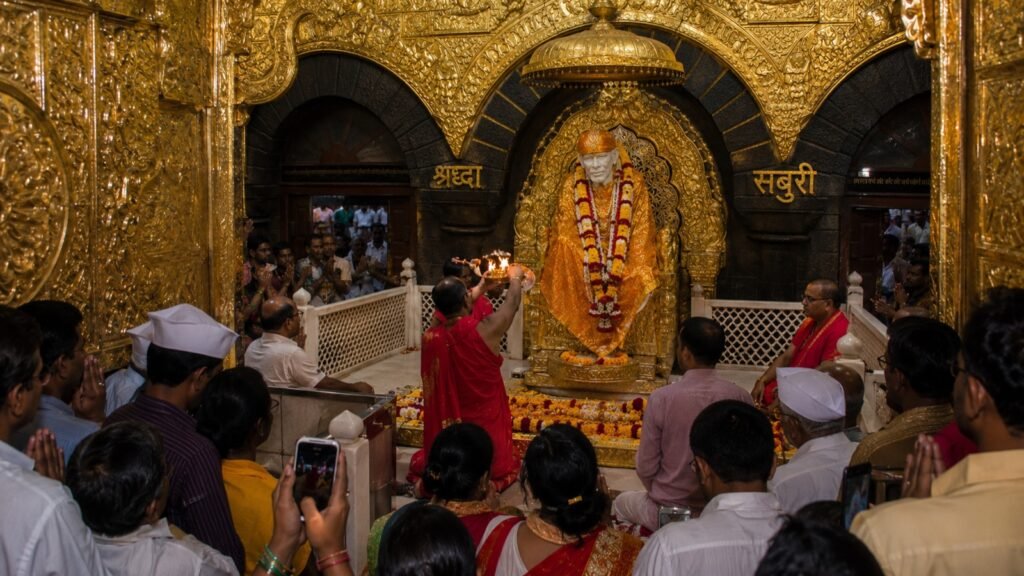
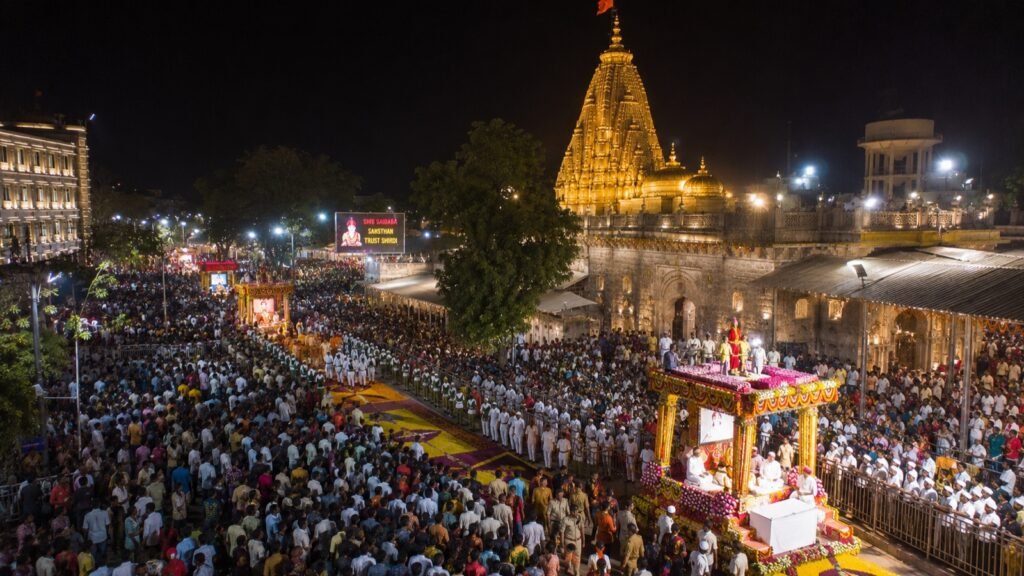
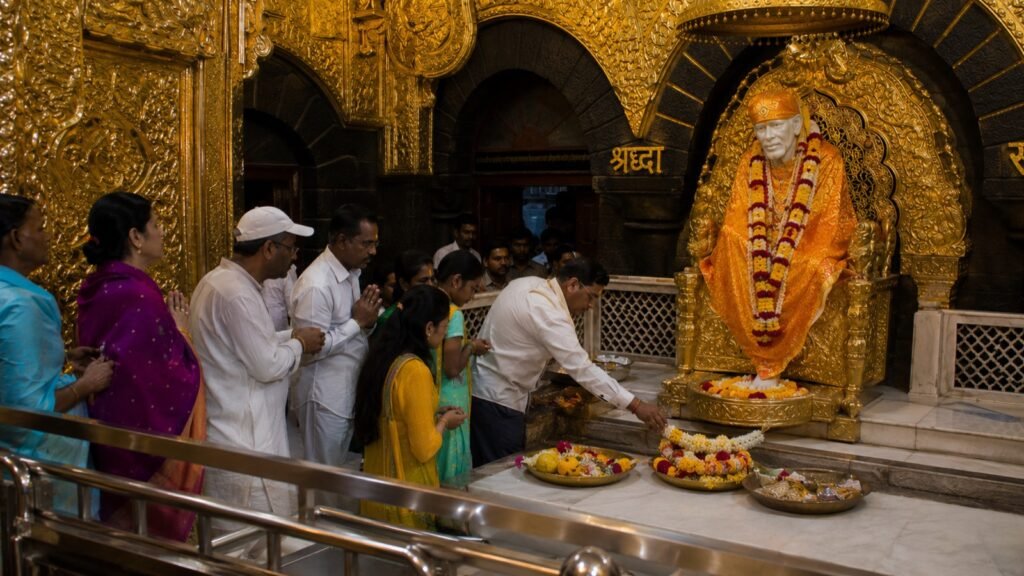
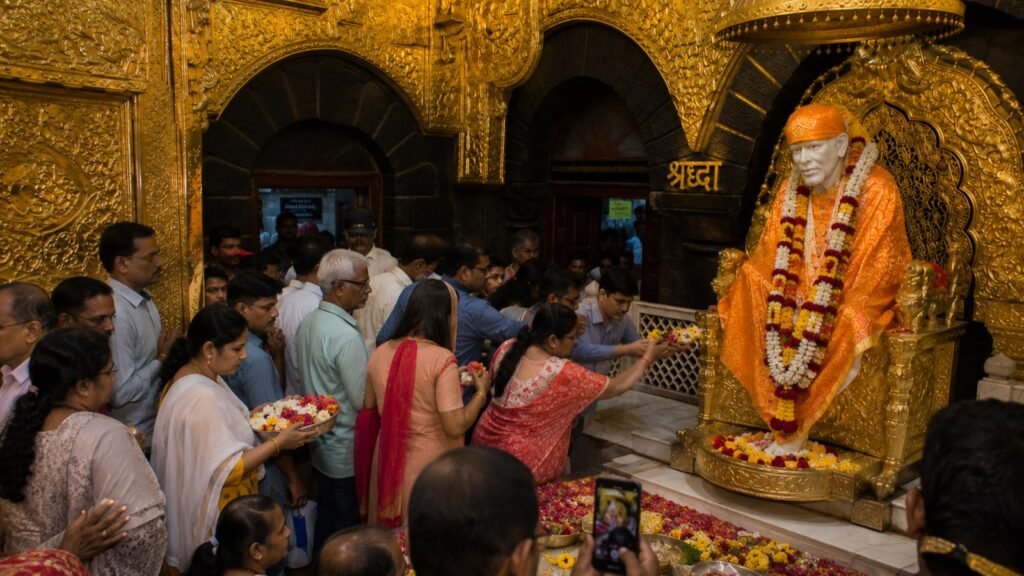
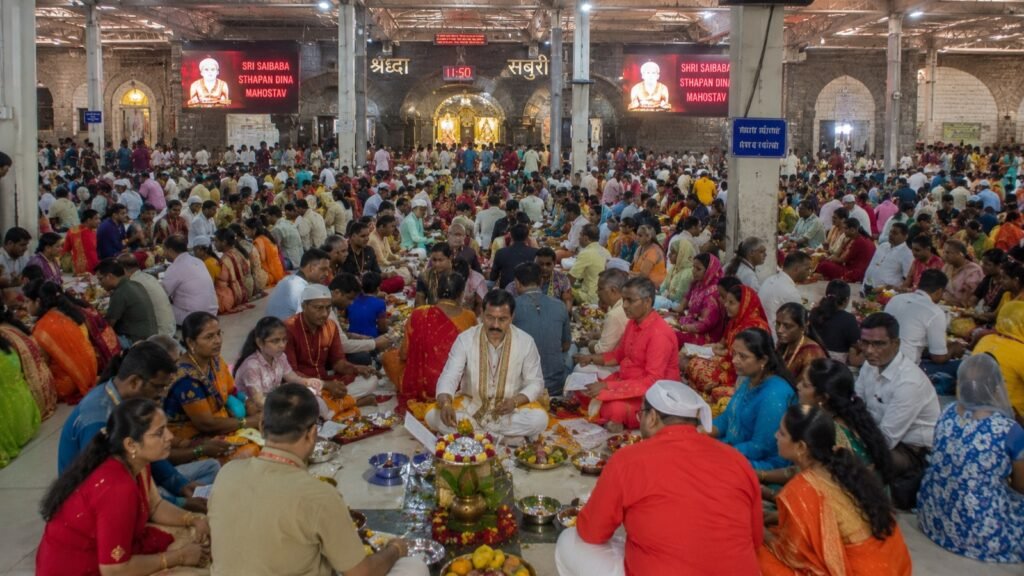
Inside the mandir — devotee moments
The Samadhi Mandir is one of India’s most photographed shrines. These are scenes you can expect to witness inside the complex on a typical day.
Pilgrim essentials
Eight short guides that answer the questions every first-time visitor asks before they reach Shirdi.
 Plan ahead
Darshan queue guide
Step-by-step walk-through of the queue complex from shoe stand to sanctum darshan.
Read Guide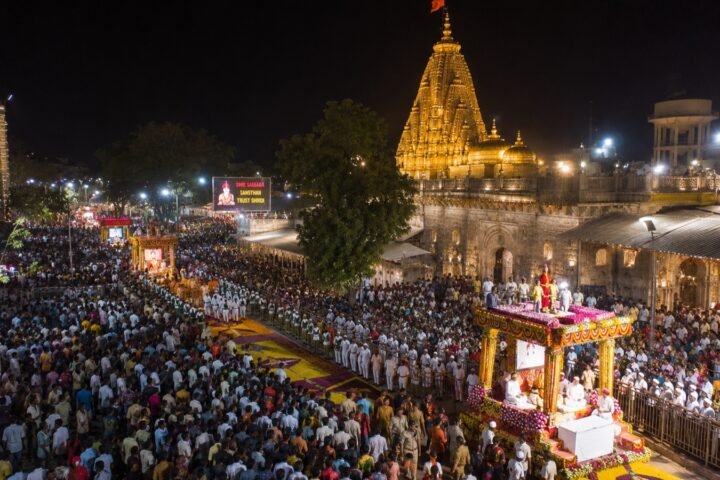 Timings
Aarti schedule
The four aartis explained, with the songs sung and what each ritual means.
Read Guide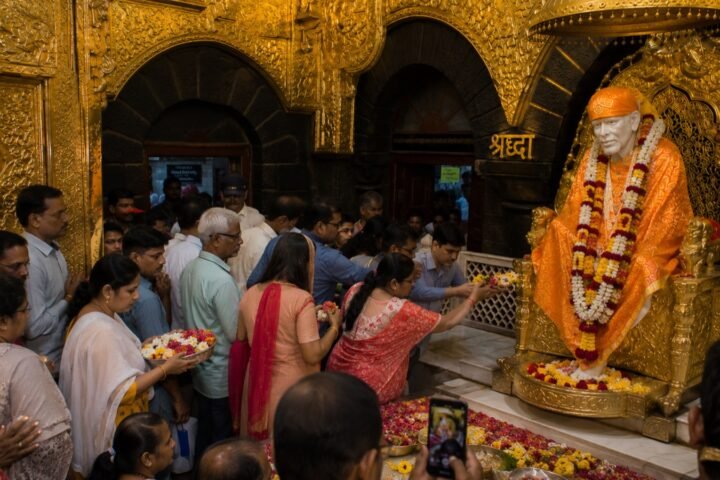 Rs 200
VIP darshan pass
How the Sansthan’s paid VIP darshan works, cost, eligibility and when to book.
Read Guide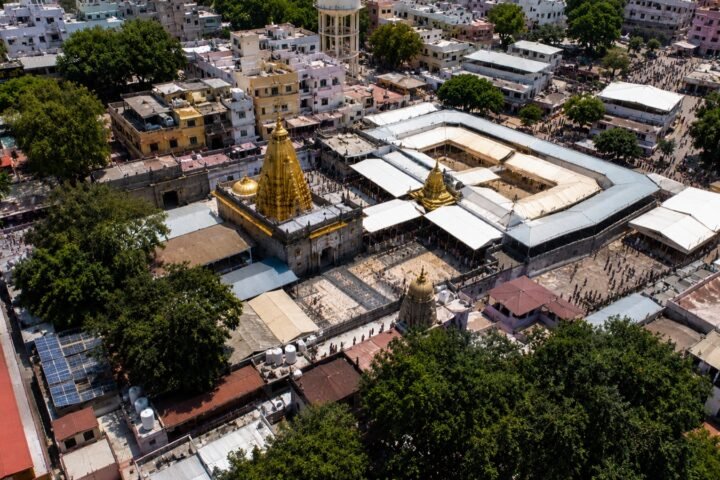 Sai Ashram
Accommodation
Bhakta Niwasthan rooms, private hotels and how to book online 30–60 days ahead.
Read GuideFrequently asked questions
What time does the Samadhi Mandir open in Shirdi?
The Samadhi Mandir opens daily at 4:45 AM with Kakad Aarti and closes after Shej Aarti at approximately 11:30 PM. The temple is open every day of the year including all festivals. Queue closing times for free darshan are typically announced 30 to 60 minutes before Shej Aarti.
Is this website the official Shirdi Sansthan?
No, shirdisansthan.org.in is an independent editorial pilgrim guide written by devotees. The official body is the Shri Sai Baba Sansthan Trust. We link to them for all bookings, and we do not accept money for fast-track entry. If a website claims to offer a “guaranteed VIP darshan” for a fee — it is not authorised. The only official channel is the Trust’s own portal listed in our footer.
How many days are enough for a Shirdi yatra?
Most pilgrims complete a fulfilling Shirdi yatra in 24 hours — arriving overnight, attending one aarti, completing Samadhi darshan and visiting Dwarkamai, Chavadi and Gurusthan before departure. Devotees who want to attend all four aartis or visit nearby sites like Shani Shingnapur typically stay two nights.
Which is the busiest day at Shirdi temple?
Thursdays are the busiest weekday because Thursday is considered Sai Baba’s day. Crowds also peak on Sundays, public holidays and during the three main festivals — Ram Navami, Guru Purnima and the Punyatithi or Vijaya Dashami. On these days queues can stretch beyond ten hours.
Can I get free darshan at Shirdi without booking?
Yes. Free darshan is always possible by joining the regular queue at the main queue complex. No booking, identity proof or payment is required. The Sansthan also offers a free, time-slot-based “Sukdah Darshan” token system that lets pilgrims return at an allotted hour instead of standing the full time.
Are mobile phones and cameras allowed inside the Samadhi Mandir?
Mobile phones and cameras are not allowed inside the inner sanctum and must be deposited at the cloakroom near the queue entrance. Photography is strictly prohibited during all four aartis. The Sansthan provides free locker facilities for valuables and electronic devices.
What is the dress code for Shirdi darshan?
There is no mandatory dress code but devotees are requested to wear modest, respectful clothing. Avoid sleeveless tops, very short skirts or shorts, and ripped jeans. Traditional Indian wear is encouraged for aarti attendance. Full guidelines are on our Shirdi yatra rules page.
